A Day in Appenzell
Two hours east by two trains — the second one shrinks — to a painted village that still votes by raised hand in the square, under a cliff inn whose photograph launched a thousand pilgrimages.
The short version
- The route runs Zurich to Gossau or St. Gallen by mainline, then the narrow-gauge Appenzeller Bahnen’s smaller carriages into the hills — about two hours total via sbb.ch, with the shrinking-train handover as the alarm’s mood-setter.
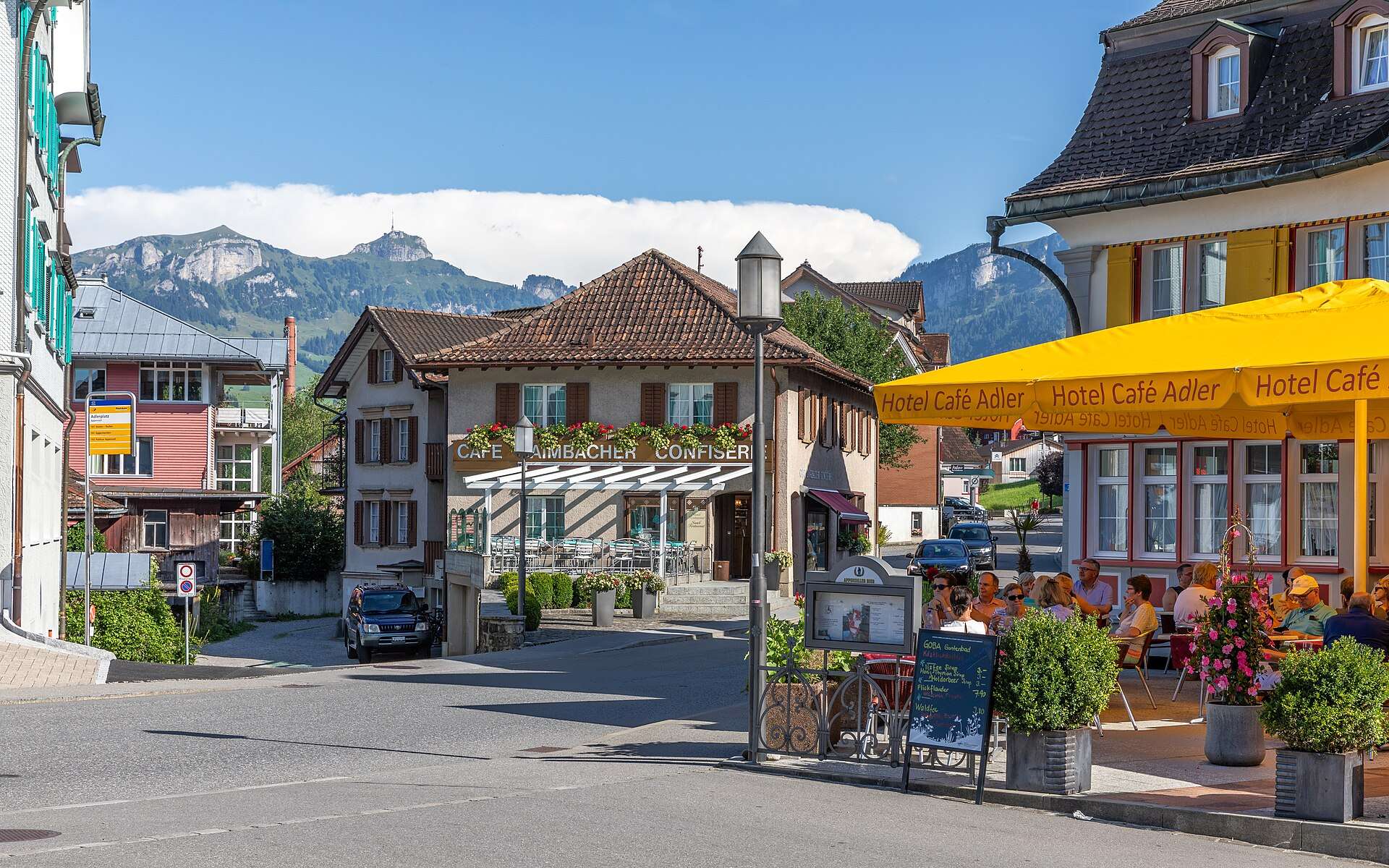
- The village’s painted façades are the arrival image: gabled houses in fresco and folk motif along the Hauptgasse, with the Landsgemeindeplatz — the voting square — at the center of the ensemble.
- The Landsgemeinde per the alarm: Appenzell Innerrhoden still decides cantonal matters by open-air assembly and raised hands on the last Sunday of April — one of only two Swiss cantons (with Glarus) keeping the medieval form alive, conducted with ceremony, side-arms tradition, and complete seriousness.
- The canton’s franchise history is stated plainly: Innerrhoden was the last Swiss canton to grant women the cantonal vote, in 1990–91 and by federal court ruling — a fact the region carries and visitors read on the record.
- Appenzeller cheese runs the secret-recipe brand with a real dairy behind it — the show dairy at Stein and village shops pour the herbal-brine story and the aged wheels — while biberli (honey-spice pastry) handles the sweet side.
- The Ebenalp cable car (CHF 30s round trip) lifts to the Alpstein’s edge for the alarm’s main event: the Wildkirchli caves’ hermitage path leading to the Äscher inn pressed against its cliff — the famous photograph in the flesh, with mountain-hut food graded honestly and a terrace nobody leaves quickly.

Getting there
The two-train route per the alarm needs no reservations — the narrow-gauge leg winds through orchard hills at a gait that resets expectations before arrival. The Ebenalp valley station sits one further stop-and-bus or a short ride beyond the village (Wasserauen), so the classic structure runs village first, mountain second, with the cable car’s last descent worth checking against your dinner plans. Landsgemeinde Sunday inverts everything: the village fills, the square becomes a parliament, and visitors watch from the edges with the respect the occasion assumes.
The day
Give the village its hour per the alarm: the Hauptgasse’s painted gables read like a picture book — brewery, pharmacy, and guild motifs overhead — with the Landsgemeindeplatz’s ring of civic buildings explaining the raised-hand tradition on its plaques. The cheese errand lands here: a wedge of aged Appenzeller and a biberli for the mountain. Then Wasserauen and the cable car up: the Ebenalp’s meadow shelf opens onto the Alpstein’s grey teeth, and the path down through the Wildkirchli caves — a prehistoric site and a hermit chapel folded into the rock — delivers you onto the cliff ledge where the Äscher leans against its overhang. The photograph per the alarm is exactly where it promised to be; the rösti is hut-standard and the terrace forgives it entirely. Walkers extend along the ridge or descend the (steep, real) trail to Seealpsee’s lake; everyone else rides down and lets the shrinking train grow back toward Zurich.
When to go
May through October runs the Alpstein season — the cable car and inn on full schedules, the meadows performing, and September’s clarity as the photographers’ pick. The last Sunday of April, per the alarm, is the Landsgemeinde: the year’s singular date, attended deliberately or dodged knowingly. Winter shortens the mountain (the inn rests off-season; the cable car keeps reduced patterns for snowshoe traffic) and leaves the painted village to itself — a quiet, valid, half-length version of the trip. Check the Äscher’s own opening dates when the cliff terrace is the point.
Frequently Asked Questions
What actually happens at the Landsgemeinde?
The canton’s voters assemble in the square, debate briefly, and decide laws and offices by raised hands counted by eye — a functioning medieval democracy run once a year with full ceremony (tradition admits side arms as voting credentials). Visitors watch respectfully from the perimeter; it’s civic ritual, not reenactment.
Is the Äscher worth it beyond the photograph?
The setting is the product — the cliff overhang, the valley drop, the terrace — and the alarm’s grading holds: the food is honest mountain-hut fare, the crowds in high summer are real, and nobody who rode up for the image leaves disappointed by lunch. Early and late hours thin the pilgrimage.
How serious is the walk from the cable car?
The cave-and-cliff path to the inn is short, downhill, and manageable for most sure-footed visitors — ten to fifteen minutes with rails where it matters. Beyond the inn, trails grade up fast: Seealpsee’s descent and the ridge routes are genuine mountain walking with real shoes assumed.
What’s special about the cheese?
A washed-rind wheel brined with a herbal blend the marketing guards as a secret — the aged versions carry genuine bite, and the Stein show dairy demonstrates the process for the curious. Buying from a village shop and eating it on the mountain is the format the region designed itself.
Appenzell or Lucerne from Zurich?
Lucerne (documented on this network) for lake, bridge, and the big-mountain excursion machine; Appenzell for folk texture, the voting square, and one perfect cliff inn. Polished versus painted — Appenzell is the day that feels furthest from a city per kilometer traveled, which is its entire argument.